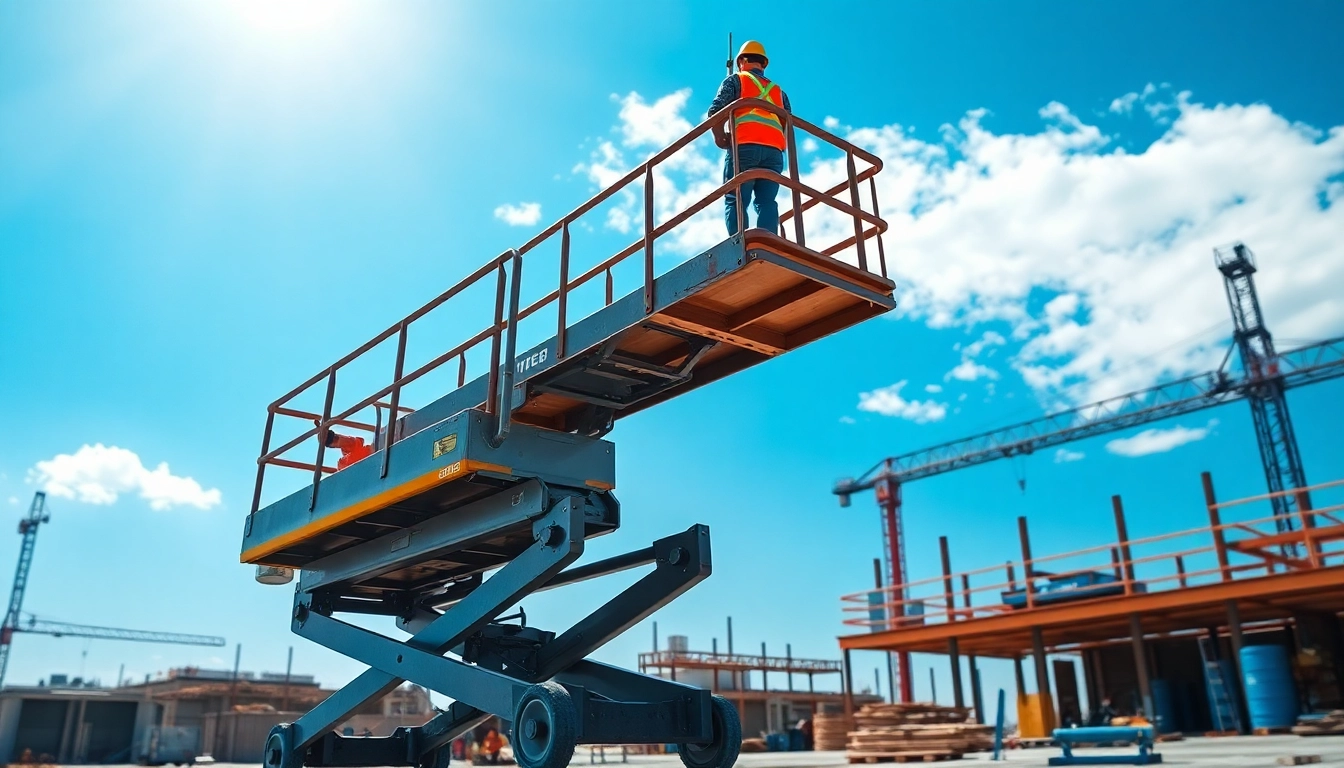
Introduction to Cherry Picker
Cherry pickers are essential tools for many industries, providing a safe and efficient way to elevate personnel and equipment to hard-to-reach areas. Whether for maintenance, construction, or emergency services, understanding the functionality of a cherry picker is crucial for effective application. A cherry picker can also be known as an aerial work platform and is designed specifically to promote high-altitude tasks. Companies can either rent or purchase these machines according to their needs. For those looking to rent, you can find a wide variety of cherry picker options cherry picker available.
What is a Cherry Picker?
A cherry picker is a type of aerial work platform that consists of a platform or bucket at the end of a hydraulic arm. The primary purpose of a cherry picker is to lift personnel or objects safely to elevated positions, such as power lines, trees, or rooftops. Unlike traditional ladders or scaffolding, cherry pickers allow for height access while maintaining stability and safety.
History and Development of Cherry Picker
The first cherry picker was developed in the late 1940s, designed originally for picking fruit from trees—hence the name. Over the years, the design evolved with advancements in hydraulic technologies and materials, leading to improved stability, maneuverability, and load capacities. Today’s cherry pickers are crucial in various fields including construction, maintenance, and emergency response, showcasing their versatility and efficiency.
Types of Cherry Picker Available
Cherry pickers come in several types, each suited for different applications:
- Telescopic Boom Lift: Provides a straight-reaching platform and is ideal for high and hard-to-access areas.
- Articulating Boom Lift: Features joints that allow for maneuverability around obstacles, great for tight spaces.
- Scissor Lifts: Provides a stable lift vertically but lacks horizontal movement, suitable for jobs requiring sustained height.
- Trailer-Mounted Cherry Pickers: Lightweight and movable, perfect for areas with less weight capacity.
How Cherry Picker Works
Mechanism Behind Cherry Picker Operation
A cherry picker operates using hydraulic systems to raise and lower the platform. When the controls engage, hydraulic fluid is pumped into cylinders that maneuver the arm, elevating the platform to the desired height. The operator can usually control both the movement direction and height from the platform or using remote controls.
Safety Features Built into Cherry Picker
Safety is paramount in the design of cherry pickers. Key safety features include:
- Guardrails: Installed around the platform to prevent falls.
- Stabilizers: Extendable outriggers that help maintain balance on uneven surfaces.
- Emergency Descent Systems: Allow operators to lower the platform in case of hydraulic failure.
- Load Sensors: Trigger alerts if weight limits are exceeded.
Key Components of Cherry Picker
The main components of a cherry picker include:
- Base: Provides stability and houses the hydraulic systems.
- Arm: Hydraulic boom that extends and retracts.
- Platform: The working area where personnel or equipment is elevated.
- Controls: Typically found on the platform and sometimes remotely, allowing manipulation of movement.
Applications of Cherry Picker
Industries Utilizing Cherry Picker
Cherry pickers are widely used across many industries, including:
- Construction: Essential for high-rise building projects and repairs.
- Telecommunications: Used for installing and maintaining telephone lines and signal towers.
- Maintenance: Commonly utilized for cleaning and inspecting buildings, bridges, and other structures.
- Film and Photography: Often employed to achieve high camera angles.
Common Use Cases for Cherry Picker
Several common scenarios leverage the utility of cherry pickers:
- Performing tree trimming and landscaping tasks.
- Installing outdoor Christmas lights or decorations.
- Conducting repairs on high electrical installations.
- Painting or refurbishing tall buildings.
Advantages of Using Cherry Picker in Various Sectors
The advantages of using cherry pickers are numerous:
- Enhanced Safety: Provides stable elevation compared to ladders or scaffolding.
- Increased Efficiency: Reduces time spent on height-related tasks.
- Better Reach: Capable of accessing areas that aren't feasible with traditional methods.
- Versatility: Useful across many applications from construction to maintenance.
Choosing the Right Cherry Picker
Factors to Consider When Selecting Cherry Picker
Selecting the right cherry picker depends on several factors:
- Height Requirements: Determine the maximum height needed for your project.
- Weight Capacity: Make sure the cherry picker can handle the weight of operators and equipment.
- Terrain Conditions: Consider if the area is flat, uneven, or restricted.
- Mobility: Evaluate whether you need a mobile or stationary unit.
Rental vs. Purchase: Which is Best for You?
The decision to rent or purchase a cherry picker depends on your specific needs:
- Rental: Ideal for short-term projects or less frequent use.
- Purchase: Worth considering for long-term use, reducing costs over time.
Cost Analysis for Cherry Picker Options
Costs associated with cherry pickers involve several factors including:
- Initial Purchase Cost: The base price of the unit depending on type and features.
- Maintenance Costs: Regular service and potential repairs can add to overall expense.
- Rental Fees: Prices can vary based on duration and equipment model.
Maintenance and Safety of Cherry Picker
Regular Maintenance Tips for Cherry Picker
Proper maintenance extends the life of a cherry picker. Key maintenance tasks include:
- Checking hydraulic fluid levels and replacing when necessary.
- Inspecting electrical wiring for any visible damage.
- Regularly testing safety features such as emergency brakes and load sensors.
- Cleaning the platform and boom to avoid corrosion.
Safety Protocols While Using Cherry Picker
To promote a safe working environment, adhere to these safety protocols:
- Always wear personal protective equipment (PPE) like helmets and harnesses.
- Ensure that ground conditions are stable before positioning the cherry picker.
- Never exceed the weight limit defined by the equipment specifications.
- Conduct a pre-operation safety inspection before use.
Common Issues and Troubleshooting Cherry Picker
Common issues that arise with cherry pickers include:
- Hydraulic Failure: Often resolved by checking hydraulic fluid levels or leaking lines.
- Electrical Problems: Must be addressed by examining the wiring and control systems.
- Stabilization Challenges: Ensure all stabilizers are correctly deployed on uneven terrain.
Frequently Asked Questions
1. Are cherry pickers safe to use?
Yes, cherry pickers are designed with safety features, but following operational safety protocols is essential.
2. What tasks can I perform with a cherry picker?
Cherry pickers are used for maintenance, construction, tree trimming, and more, particularly in elevated work areas.
3. How high can cherry pickers typically reach?
Cherry pickers can reach heights ranging from 20 to over 150 feet, depending on the type and model.
4. Do I need any special training to operate a cherry picker?
Yes, operators typically require training certification to ensure safe and effective operation.
5. How often should a cherry picker be maintained?
Cherry pickers should undergo regular inspections and maintenance, ideally before each use, to ensure safety and functionality.