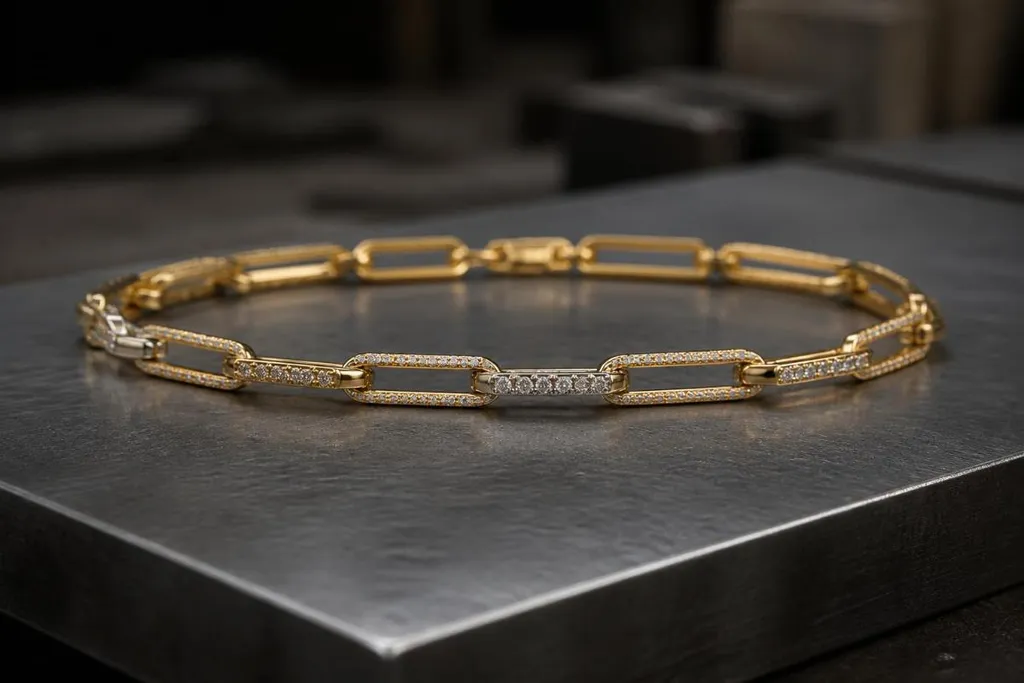
A bracelet has to do something that many other pieces of fine jewellery do not: move with one of the busiest parts of the body. It shifts as the wrist bends, comes into contact with desks and clothing, and often sits beside a watch. That makes fit and construction particularly important. A beautiful bracelet that constantly catches, rotates or feels restrictive is unlikely to become an everyday favourite.
For anyone looking to order bracelets from Lily Arkwright, it is useful to consider how the piece will actually be worn before focusing on sparkle alone. Diamond and gemstone designs can range from delicate everyday accents to more substantial statement pieces, but their success depends on proportion, fastening, metal choice and comfort. The right bracelet should feel secure without being restrictive and distinctive without becoming impractical.
Start With the Right Fit
Bracelet sizing is not simply a matter of matching the exact circumference of the wrist. Some additional room is normally required so the piece can move naturally without feeling tight.
Personal preference plays a role. A close-fitting bracelet tends to remain in a more consistent position, which may appeal to someone who dislikes jewellery sliding towards the hand. A looser fit creates greater movement and can feel more relaxed, although excessive length may allow the bracelet to catch more easily.
The design itself should influence sizing. A fine chain behaves differently from a structured gemstone bracelet, so the same measurement may not produce an identical wearing experience across styles.
Think about where the bracelet should sit as well. If it will regularly be worn beside a watch, enough space should remain for both pieces without creating constant friction. For a standalone bracelet, slightly freer movement may be desirable.
Comfort is ultimately more useful than following a preferred measurement in isolation.
Choose a Style for the Way It Will Be Worn
Everyday bracelets generally benefit from streamlined construction. Fine chains, restrained gemstone settings and balanced proportions can provide visible detail without interfering significantly with normal movement.
Diamond-set designs introduce consistent sparkle across the wrist and can work as either everyday jewellery or occasion pieces depending on stone scale. Smaller stones create a refined line of light, while larger stones naturally give the bracelet greater visual weight.
Coloured gemstones offer another approach. Sapphire, emerald, ruby and softer shades can introduce personality without requiring a highly elaborate setting.
A more substantial design makes sense if the bracelet will usually be worn alone. Someone who already wears several pieces together may prefer a finer bracelet that contributes texture or sparkle without making the stack feel crowded.
The intended role matters more than choosing the most decorative option available.
Consider Metal, Settings and Security
Precious metal establishes the bracelet's underlying character.
Platinum and white gold create a cool appearance that works naturally with colourless stones and silver-toned watches. Yellow gold brings warmth and can make even a restrained bracelet visually distinctive. Rose gold provides a softer alternative and can complement warmer gemstone colours particularly well.
Gemstone settings require practical consideration because bracelets encounter frequent contact with surrounding surfaces. Low, secure settings can be useful for regular wear, while more elaborate arrangements may require greater awareness during daily activities.
The fastening deserves equal attention. A bracelet is only enjoyable if it feels secure on the wrist and can be operated comfortably. Depending on the design, additional safety mechanisms may provide reassurance for more substantial gemstone pieces.
Construction should therefore be judged as carefully as appearance.
Think About Stacking and Long-Term Wear
Bracelets are particularly well suited to layering, but successful stacks depend on variation.
Combining different widths can prevent several pieces from visually merging into one heavy band. A fine diamond bracelet may sit elegantly beside a plain precious-metal piece, while a coloured gemstone design can provide a focal point among simpler jewellery.
A watch can also become part of the composition. Matching metals creates a cohesive look, while intentional contrast can feel more contemporary.
Physical contact should still be considered. Precious-metal surfaces and gemstone settings can mark neighbouring pieces if they repeatedly rub together. Leaving some separation or rotating combinations can help limit unnecessary wear.
Regular cleaning is important because bracelets readily collect traces of hand cream, soap and everyday residue. Periodic professional inspections are also sensible for gemstone-set designs, particularly where numerous small settings are involved.
Final Thought
A fine bracelet should be chosen with movement in mind. Fit, fastening, setting height and overall scale determine whether a design feels effortless after several hours of wear, while metal and gemstone choices establish its visual identity.
The most useful bracelet is not necessarily the boldest. It is the one that suits the wearer's routine, coordinates naturally with existing jewellery and remains comfortable enough to reach for regularly. With those practical details resolved, a bracelet can provide lasting versatility without sacrificing the refinement expected from fine jewellery.